
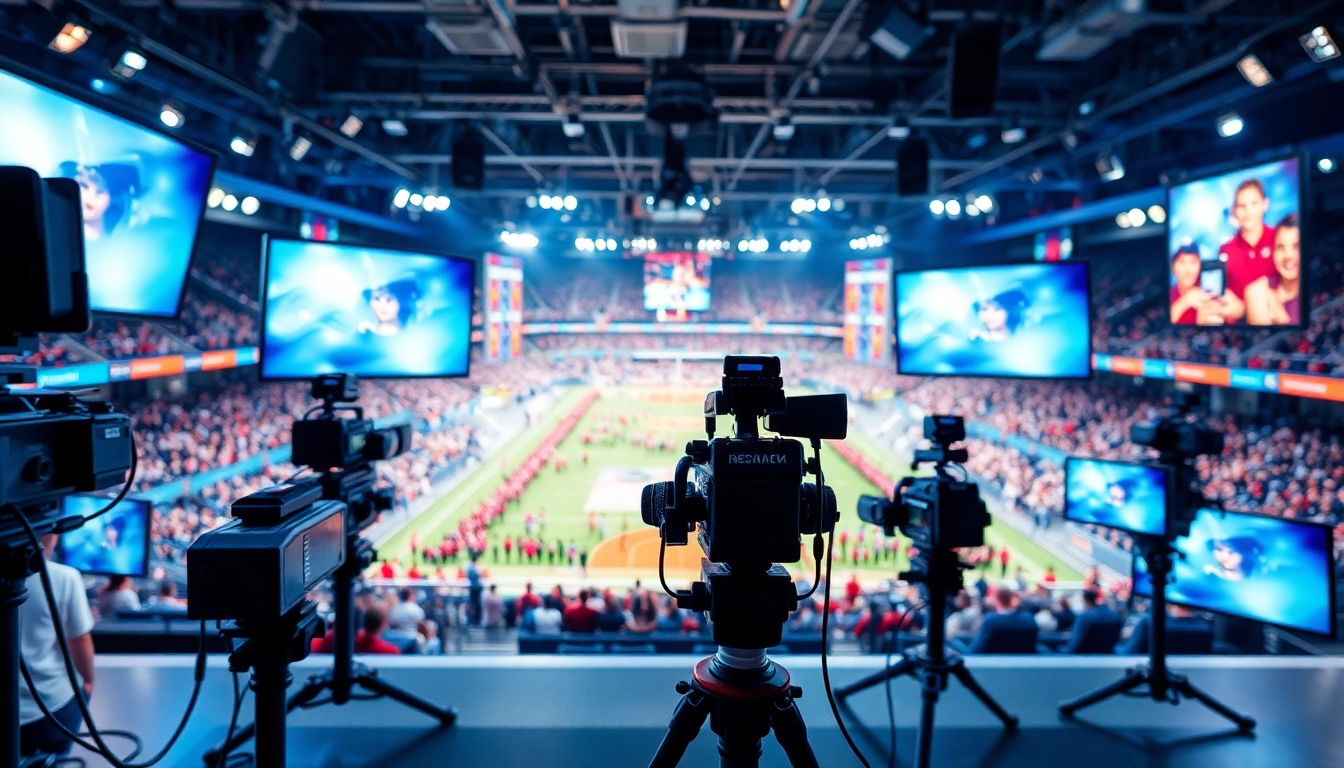
Understanding Sports Broadcasting
Definition and Importance
Sports Broadcasting refers to the live transmission or delayed airing of sporting events via various mediums like television, radio, and online platforms. This industry is pivotal in connecting sports enthusiasts with live action, bringing the excitement of games directly into homes across the world. The significance of Sports Broadcasting transcends mere entertainment; it acts as a catalyst for fan engagement, community building, and revenue generation. With revenues projected to soar into billions, the broadcasting of sports is foundational for leagues, teams, and players, ensuring financial sustainability and broadening their reach.
History of Sports Broadcasting
The roots of sports broadcasting can be traced back to the early days of radio in the 1920s, where simple play-by-play commentary began to draw local audiences. The first-ever sports broadcast was a baseball game between the Brooklyn Dodgers and the Cincinnati Reds in 1921. The 1950s marked a pivotal transformation as television became ubiquitous, allowing for live coverage of major events. Over the decades, iconic moments such as the Super Bowl, FIFA World Cup, and Olympics have been broadcasted to millions, solidifying the cultural importance of live sports broadcasting.
Key Players in the Industry
The sports broadcasting ecosystem comprises various stakeholders including media companies, leagues, teams, and advertisers. Major networks have established lucrative partnerships with sports leagues for exclusive broadcasting rights. This includes both traditional broadcast outlets and digital platforms, which provide vital revenue streams through advertisements and subscription models. Additionally, sports agencies play a crucial role in managing broadcasting rights and securing deals for their clients, often negotiating multi-million dollar contracts that elevate the profile of the sport and its athletes.
Technological Advancements in Sports Broadcasting
The Role of Streaming Services
In recent years, streaming services have revolutionized the way fans consume sports content. They offer flexibility, allowing viewers to watch games on-demand or live, from anywhere in the world. Platforms like OTT (Over-The-Top) services have emerged, challenging traditional networks by providing unique content options such as multi-angle views, real-time statistics, and interactive features. This shift has not only broadened access to sports broadcasting but has also prompted traditional broadcasters to enhance their offerings to retain viewership amidst increasing competition.
Enhancing Viewer Experience with AR and VR
Augmented Reality (AR) and Virtual Reality (VR) technologies are setting new standards in viewer experiences. By integrating AR overlays during broadcasts, networks provide real-time information such as player stats and historical performances, enriching the audience’s understanding of the game. VR, on the other hand, allows fans to immerse themselves in the experience, simulating live attendance from their homes. This technology elevates viewer engagement, offering a unique perspective and a more interactive way to enjoy sports.
Mobile Broadcasting Innovations
The proliferation of smartphones has necessitated advancements in mobile broadcasting technologies. Fans can now enjoy live sports on their mobile devices with high-resolution streams and minimal disruptions. Innovations like mobile apps that facilitate real-time notifications, game highlights, and customizable viewing options have changed the landscape of sports consumption. Moreover, social media integration allows for immediate interaction and feedback, enriching the fan experience.
Best Practices for Sports Broadcasting
Improving Commentary and Analysis
Quality commentary is essential for an engaging sports broadcast. Commentators must provide insightful analysis, context, and storytelling that resonates with both casual and die-hard fans. Utilizing experienced ex-athletes as analysts can enhance the credibility of the commentary. Additionally, incorporating statistical analysis and impactful narratives makes broadcasts more informative and enjoyable, creating a satisfying blend of entertainment and knowledge for viewers.
Engagement Tactics for Viewers
Engagement strategies are crucial in retaining audience interest during broadcasts. Interactive features on digital platforms, such as polls, Q&A sessions, and social media integration, allow viewers to interact and participate in ongoing conversations. Additionally, gamification elements like fantasy leagues or predictive games heighten viewer investment and enthusiasm. Broadcasters should continuously explore fresh engagement tactics to keep the experience vibrant and exciting.
Metrics to Measure Performance
Evaluating the success of sports broadcasting extends beyond viewership ratings. Key performance metrics include engagement rates, social media interactions, and viewer retention statistics. Analyzing audience feedback through surveys and social media comments provides vital insights on viewer preferences, helping broadcasters refine content delivery. Coupled with data analytics, these metrics allow producers to make informed decisions that enhance future broadcasts.
Challenges in Sports Broadcasting
Dealing with Broadcast Rights and Regulations
Broadcast rights and legal regulations pose significant challenges in sports broadcasting. Negotiating exclusive rights can lead to fierce competition, with networks investing heavily to outbid rivals. Furthermore, compliance with regulations protects intellectual property and oversees advertising practices. Understanding regional laws and broadcasting standards is fundamental for all stakeholders to navigate these complex challenges effectively.
Adaptation to Changing Viewer Preferences
Sports broadcasters face the constant challenge of adapting to evolving viewer preferences. As younger audiences gravitate towards online and mobile content, traditional networks must innovate their distribution methods. This includes providing diverse content formats, delivering shorter highlight reels, or even creating engaging behind-the-scenes content to capture the attention of a broader demographic. Conducting audience research can aid in addressing these shifting expectations appropriately.
Managing Live Event Interruptions
Live sports broadcasts are inherently unpredictable. Weather interruptions, technical difficulties, or even unscheduled events can disrupt the viewer experience. Developing contingency plans for such occurrences is essential. Broadcasters can employ filler content, such as interviews, analytics, or viewer interactions, to maintain engagement during unforeseen delays. Incorporating real-time updates and transparency can ensure audiences remain informed and engaged through interruptions.
Future Trends in Sports Broadcasting
Personalizing Content for Audiences
The future of sports broadcasting will likely hinge on personalization. Tailoring experiences based on viewer preferences, such as customization options for camera angles, commentary styles, and content delivery methods, will enhance viewer satisfaction. Data analytics can identify patterns in viewer behavior, enabling broadcasters to curate content uniquely and offer tailored experiences that meet the demands of diverse audiences.
The Impact of E-sports on Traditional Sports Broadcasting
E-sports have carved out a significant niche in the broadcasting landscape, attracting millions of viewers globally. Their rise presents both competition and opportunities for traditional sports broadcasters. Integrating e-sports content within existing sports broadcasting frameworks can capture the burgeoning audience demographics. This crossover can foster innovative programming that resonates with younger viewers while distinguishing traditional broadcasts in an evolving market.
Global Expansion of Sports Broadcasting
Globalization has broadened the potential reach for sports broadcasting. With digital technologies breaking barriers, broadcasters from different regions can tap into international markets. Localization efforts, combined with strategic partnerships across borders, will help leagues and teams expand their fanbase. This trend will necessitate adaptations in content delivery, scheduling, and marketing strategies to cater to diverse cultures and preferences.
FAQs about Sports Broadcasting
What is Sports Broadcasting?
Sports Broadcasting involves the live or delayed airing of sporting events through television, radio, and online platforms, aiming to connect fans with their favorite sports.
How has technology affected Sports Broadcasting?
Technology has transformed Sports Broadcasting through streaming services, AR and VR enhancements, and mobile innovations that improve viewer engagement and accessibility.
What are common challenges in Sports Broadcasting?
Challenges include securing broadcast rights, adapting to viewer preferences, and managing interruptions during live events while maintaining audience engagement.
How can Sports Broadcasting improve viewer engagement?
Improving viewer engagement can be achieved through interactive features, refreshing content formats, and incorporating expert analysis and storytelling elements.
What trends will shape the future of Sports Broadcasting?
Future trends include increased personalization of content, the impact of e-sports on traditional broadcasting, and the global expansion of sports reach through digital technology.